
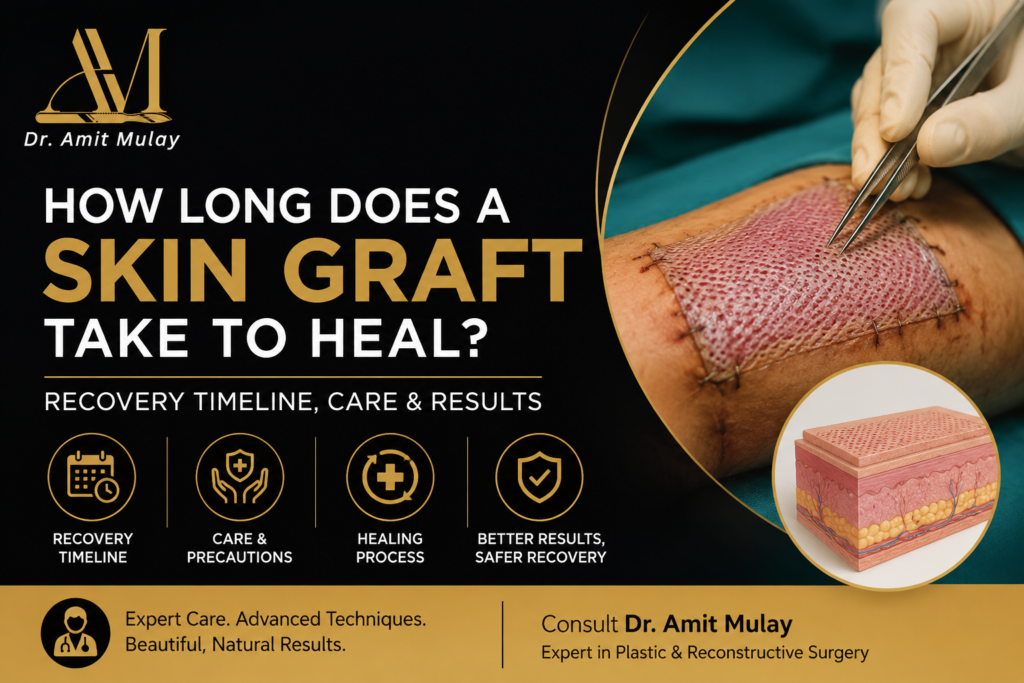
Skin grafting is a common reconstructive procedure used to treat burns, traumatic injuries, chronic wounds, skin loss, and certain surgical defects. While the procedure itself is highly effective, many patients are concerned about one important question: How long does a skin graft take to heal?
Understanding the skin graft recovery process can help patients set realistic expectations and achieve the best possible results. This guide explains the healing timeline, aftercare tips, and factors that influence recovery after skin grafting surgery.
What Is a Skin Graft?
A skin graft is a surgical procedure where healthy skin is taken from one area of the body (donor site) and transplanted to another area that has lost skin due to injury, burns, infection, or surgery.
Skin grafting is commonly used for:
- Burn injuries
- Road accident wounds
- Chronic non-healing wounds
- Diabetic foot ulcers
- Skin cancer reconstruction
- Trauma-related skin loss
The procedure helps protect underlying tissues, promote healing, and improve both function and appearance.
Skin Graft Recovery Timeline
First Week After Surgery
During the first few days, the graft begins attaching to the underlying tissue and developing a new blood supply. Patients may experience:
- Mild swelling
- Redness around the treated area
- Mild discomfort
- Dressing protection over the graft
Proper wound care during this stage is crucial for successful healing.
Two to Three Weeks
Most skin grafts start stabilizing within 2–3 weeks. The graft gradually becomes stronger and begins blending with the surrounding skin.
Patients may notice:
- Reduced swelling
- Improved skin attachment
- Early skin color changes
- Better wound closure
One to Three Months
During this phase, the graft continues maturing and strengthening.
Common improvements include:
- Better skin texture
- Reduced sensitivity
- Improved appearance
- Increased flexibility in the treated area
Six Months to One Year
Complete skin graft recovery may take several months. Final cosmetic results often become visible after 6–12 months as the skin continues to adapt and remodel.
Factors That Affect Skin Graft Recovery
Several factors can influence healing time:
Size and Location of the Graft
Larger grafts typically require more recovery time than smaller grafts.
Patient’s Overall Health
Conditions such as diabetes, poor circulation, and smoking can delay healing.
Wound Care Compliance
Following post-operative instructions significantly improves graft survival and recovery.
Nutrition
A protein-rich diet and proper hydration support faster tissue repair and wound healing.
Skin Graft Care: Do’s and Don’ts
Do’s
- Keep dressings clean and dry
- Follow your surgeon’s instructions carefully
- Eat nutritious foods rich in protein and vitamins
- Attend follow-up appointments
- Take prescribed medications as directed
Don’ts
- Avoid smoking and tobacco products
- Do not scratch or disturb the graft site
- Avoid excessive sun exposure
- Refrain from strenuous activities until approved by your surgeon
Proper aftercare can greatly improve skin graft recovery and reduce complications.
When Should You Contact Your Surgeon?
Seek medical attention if you experience:
- Excessive pain
- Increased redness or swelling
- Fever
- Bleeding from the graft site
- Unusual discharge or foul odor
Early intervention can prevent complications and improve outcomes.
Dr. Amit Mulay – Skin Grafting Specialist in Pune
Successful skin graft recovery depends not only on the surgery itself but also on expert planning and post-operative care. Dr. Amit Mulay, a trusted Plastic and Reconstructive Surgeon in Pune, provides advanced skin grafting procedures for burns, trauma injuries, chronic wounds, and reconstructive needs.
His patient-centered approach focuses on:
- Advanced wound reconstruction
- Burn injury management
- Skin graft surgery
- Scar management
- Post-operative recovery guidance
Common Questions People Search Online
- How long does a skin graft take to heal?
- What is the recovery time after skin graft surgery?
- Is skin graft surgery painful?
- Can skin grafts fail?
- Best skin graft surgeon in Pune
- Skin graft recovery tips
- Burn injury skin graft treatment
- Plastic surgeon for skin grafting in Pune
- Skin graft surgery near me
- Wound reconstruction specialist Pune
Final Thoughts
Skin grafting is a highly effective procedure that helps restore damaged skin and improve healing after burns, injuries, and chronic wounds. While recovery varies from patient to patient, proper wound care, healthy lifestyle choices, and expert medical supervision can significantly improve outcomes.
If you are considering skin graft surgery or need treatment for a non-healing wound, consulting an experienced plastic surgeon can help you achieve the best functional and cosmetic results.