
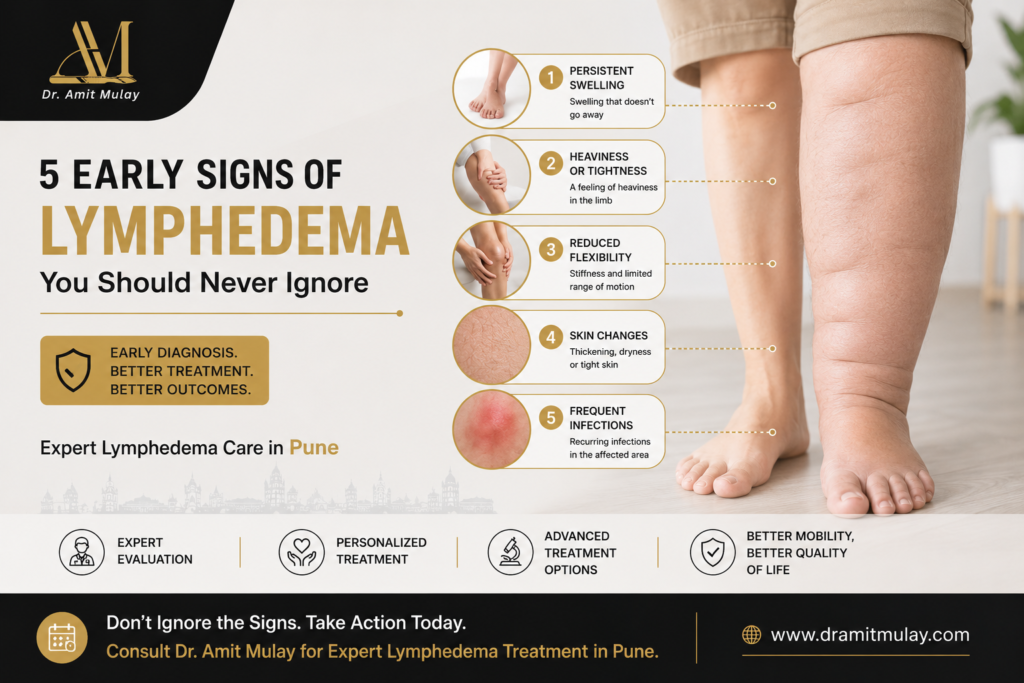
Lymphedema is a long-term condition that causes swelling due to a blockage or dysfunction in the lymphatic system. It most commonly affects the arms and legs and often develops gradually, making it easy to overlook in the early stages. Many people dismiss the symptoms as temporary water retention, fatigue, or poor circulation. However, early diagnosis can significantly improve treatment outcomes and prevent the condition from worsening.
If you are a Pune resident experiencing persistent swelling or discomfort in your limbs, understanding the early signs of lymphedema can help you seek timely medical attention.
1. Persistent Swelling in One Arm or Leg
One of the most common signs of lymphedema is swelling that does not disappear with rest. You may notice that one arm, leg, foot, or hand appears larger than the other.
Initially, the swelling may come and go throughout the day, but over time it can become permanent if left untreated.
If the swelling lasts for several weeks, it is important to consult a specialist rather than self-medicating.
2. A Feeling of Heaviness or Tightness
Many patients describe a constant feeling of heaviness in the affected limb. Activities that were once simple, such as climbing stairs, carrying groceries, or walking long distances, may suddenly feel more difficult.
This sensation occurs because excess lymph fluid accumulates in the tissues, creating pressure and discomfort.
3. Reduced Flexibility and Restricted Movement
Lymphedema can gradually affect mobility and flexibility. You may notice:
- Difficulty bending your knees or ankles
- Trouble wearing rings, bracelets, or watches
- Tightness while moving your arms
- Reduced range of motion
Early intervention can help preserve mobility and improve daily comfort.
4. Skin Changes and Thickening
As lymphedema progresses, the skin may begin to feel tight, hard, or thickened.
Other skin-related symptoms may include:
- Dryness
- Increased sensitivity
- Hardening of tissues
- Recurring redness
Ignoring these changes can increase the risk of infections and further complications.
5. Frequent Infections in the Affected Area
The lymphatic system plays an important role in the body’s immune defense. When it is not functioning properly, patients may become more susceptible to infections.
Watch for symptoms such as:
- Redness
- Warmth in the swollen area
- Fever
- Pain or tenderness
Repeated infections require immediate medical evaluation.
Who Is More Likely to Develop Lymphedema?
Certain individuals have a higher risk of developing lymphedema, including:
- Patients who have undergone breast cancer surgery
- Individuals who have had lymph node removal
- People who received radiation therapy
- Those with obesity
- Individuals with recurrent infections or trauma affecting the lymphatic system
Many patients in Pune develop secondary lymphedema following cancer treatment, making regular follow-ups extremely important.
Why Early Diagnosis Matters
Lymphedema cannot always be completely cured, but it can be effectively managed. Delaying treatment may lead to:
- Progressive swelling
- Skin hardening
- Recurrent infections
- Reduced mobility
- Reduced quality of life
Early treatment often includes compression therapy, exercise programs, physiotherapy, skin care management, and advanced surgical options for suitable candidates.
Regain Comfort, Confidence and Mobility With Expert Care
Persistent swelling should never be ignored, especially when it begins affecting your daily activities. Early diagnosis can help slow disease progression and improve long-term outcomes.
Dr Amit Mulay, a Plastic, Reconstructive and Cosmetic Surgeon in Pune, provides comprehensive evaluation and advanced treatment solutions for patients with lymphedema. With expertise in reconstructive and microsurgical procedures, he offers personalized treatment plans designed to reduce swelling, improve mobility, and enhance overall quality of life.
If you are experiencing any early signs of lymphedema, schedule a consultation with Dr Amit Mulay and take proactive steps toward better health before the condition progresses.